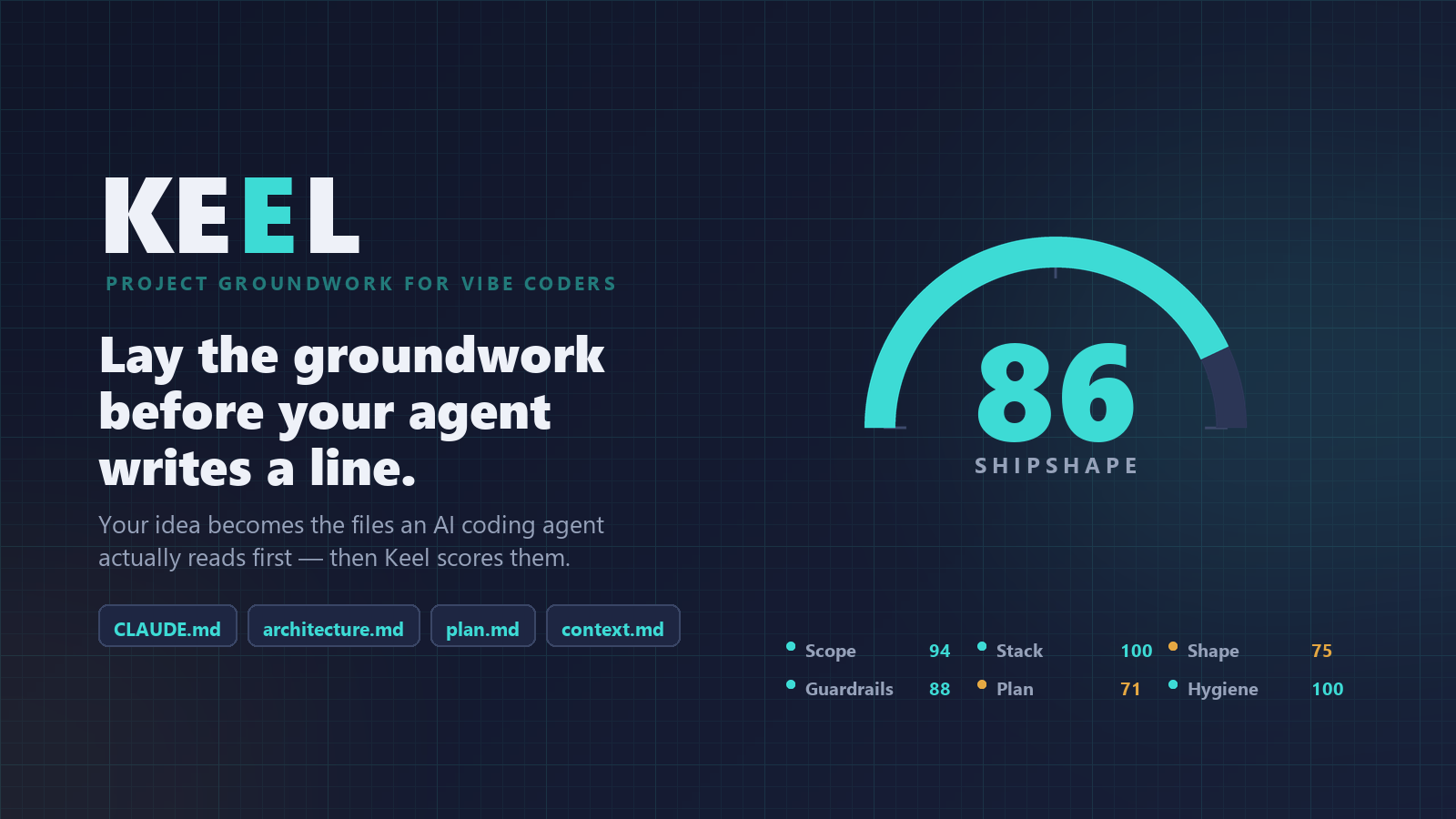
What you get
- The pack, written for youCLAUDE.md, architecture.md, plan.md, context.md and a decisions log — generated from your brief, and yours to edit.
- A gauge that names the failureSix axes, live as you type. Not a score — a sentence about what will go wrong, and a button that opens the field that fixes it.
- It knows which agent you useClaude Code reads CLAUDE.md, Cursor reads .cursor/rules, Copilot reads .github. Pick yours and the tree changes shape.
- A plan cut into single sessionsSlices small enough to finish, each with a check that is either true or false. The app counts them, so a missing one is visible.
- Guardrails that change behaviourThe hard rules that stop the expensive session: no silent refactor, no new dependency, nothing deleted without asking.
- Every file weighed against its budgetPast about 20 KB a reference stops being read whole and nothing tells you. Keel puts a meter on it before that costs a month.
- The ArchitectYour brief becomes a data model and a route table. What it could not know comes back as an open question, never a guess.
- The Prompt HelperA rough ask becomes a prompt that names the files, states the boundary and says what done means.
- Drift ReviewPaste the docs you have now and see what has rotted: stale claims, a log hiding in a reference, pointers to files that are gone.
- RoutinesThe repeatable moves worth setting up for this project — the session rituals and the checks you keep forgetting.
- Bring your own keyConnect an OpenAI or Gemini key and every AI tool unlocks. The key lives in your browser and never reaches us.
- Hand off in one pressThe whole pack as one paste, file by file, or the first message to send — whichever your agent wants.
Is this for you?
- You build with Claude Code or Cursorand the first session always goes somewhere you did not ask it to go.
- You cannot read the code closelyso the rules have to be right before the code is written, not after.
- You have started this twice alreadyand both times it got big in the wrong direction.
- You are a developer using an agentand you already know a good CLAUDE.md is worth more than a good prompt.
- Your CLAUDE.md has quietly rottedand you would like to know which parts of it are no longer true.
- You have half an hour and an ideawhich is exactly the amount of setup this asks for.
Free to use — upgrade for more
The AI half: the Architect, the Planner, the Prompt Helper, Drift Review and Routines — plus unlimited projects.
$12/mo
- 300 AI credits a month — up from 10 on free
- Unlimited projects (free keeps 3)
- The Architect — your brief becomes a real architecture.md with a data model
- The Planner — a plan cut into slices one session can finish
- The Prompt Helper — a rough ask becomes a precise prompt, with the files named
- Drift Review — paste your project's current docs and see what has rotted
- Routines — automation your agent can run for you
About Keel
Vibe coding does not fail at the prompt
It fails at the setup. An agent with no written scope restates your idea in its own words and builds that instead. Everything you did not say — the stack, the data model, whether there are accounts — it decides in the first session, and every session after inherits the answer. Keel is the half hour before that: a guided brief that asks the questions an agent would otherwise answer for you, and a pack of documents it reads before it writes a line.
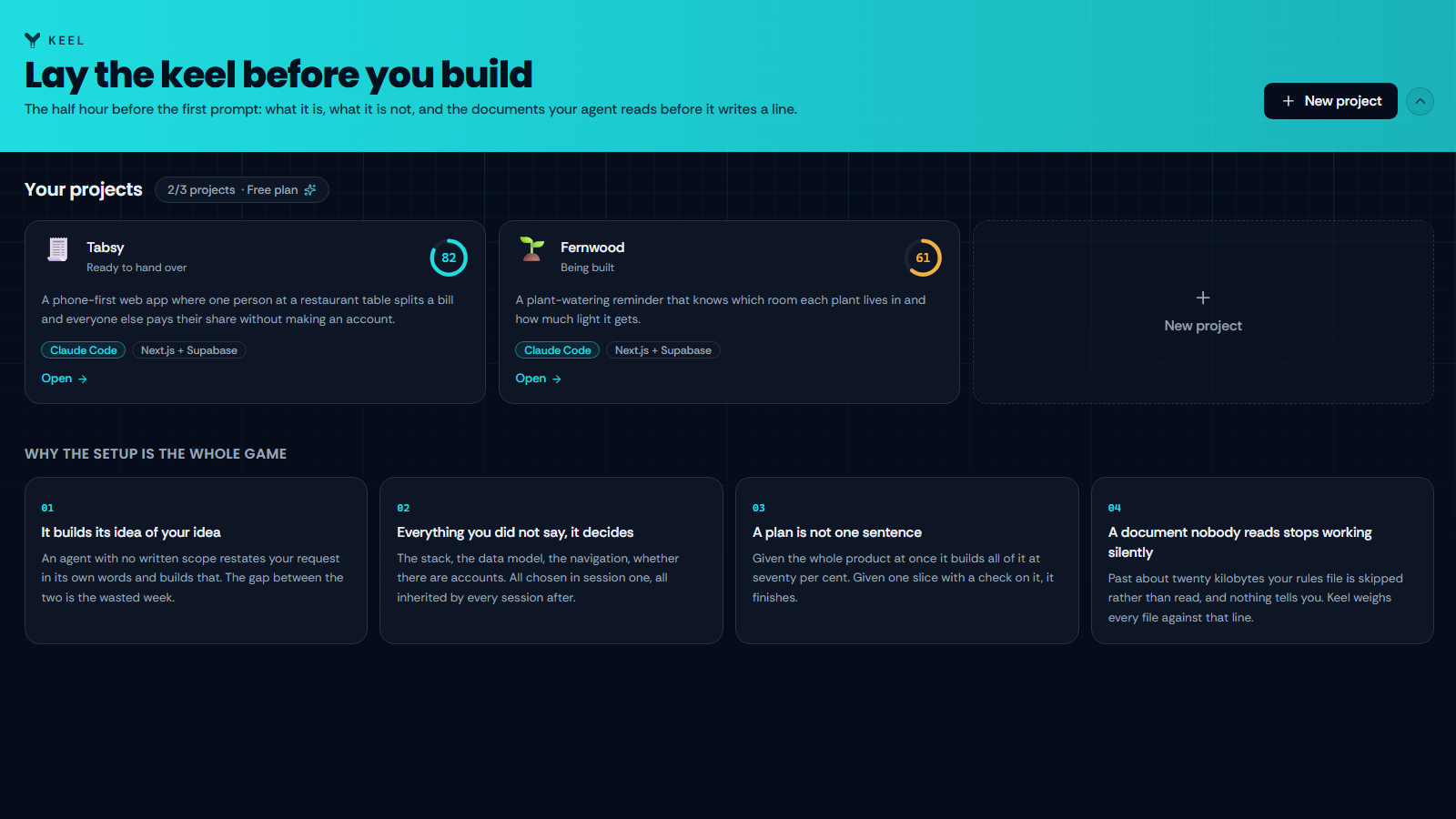
Every question has its cost printed under it
The brief is four short steps, and the grey line under each field is not help text — it is what goes wrong without an answer. "What is this NOT?" says that with nothing there, an agent builds the biggest version of your idea it can imagine. "Who is it for?" says that "users" produces an app for nobody. That is the difference between a form somebody fills in and a form somebody skips.
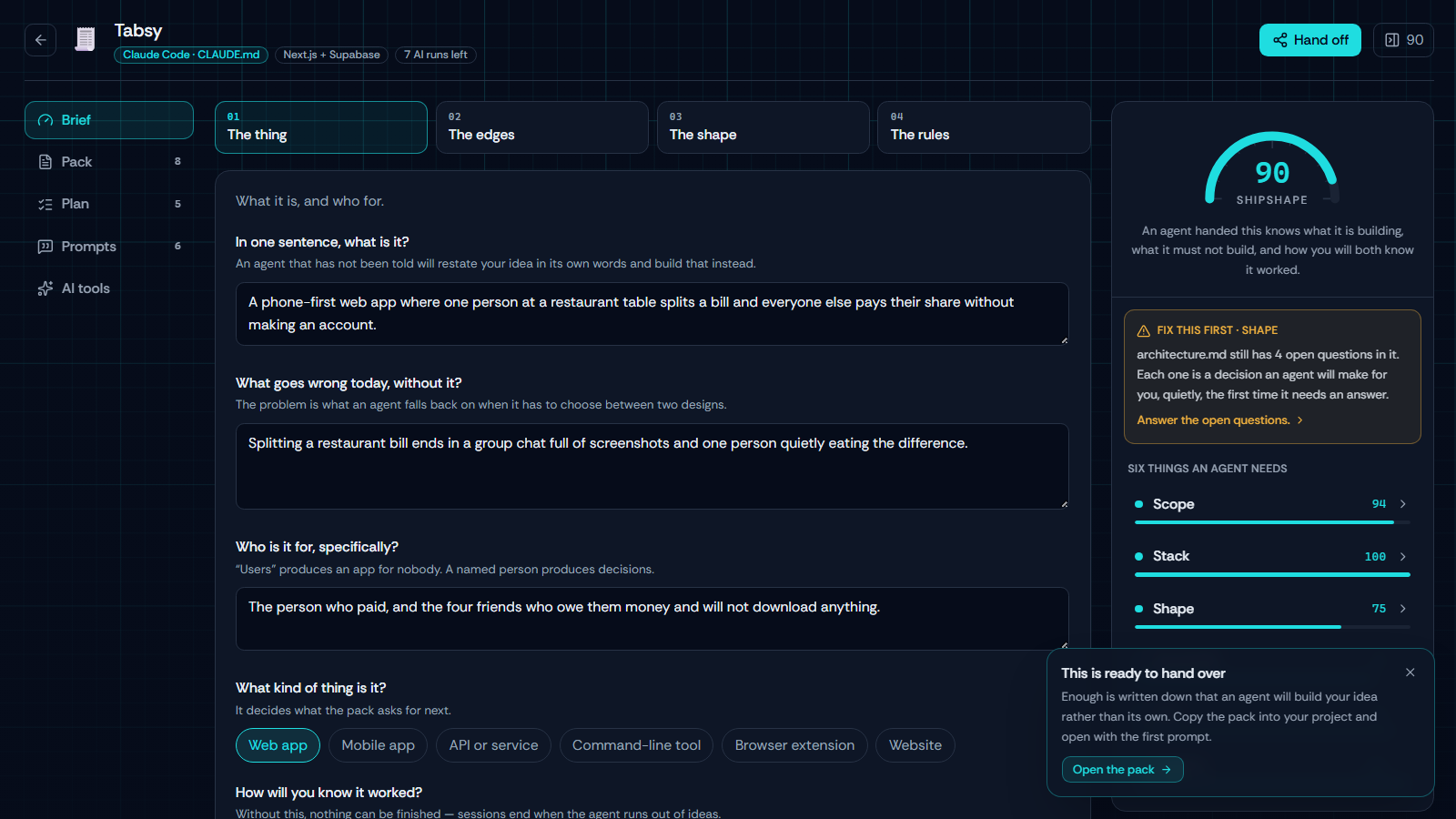
The files your agent reads first
Keel writes the pack from your brief: the rules file your particular agent opens on its own, an architecture reference with the data model in it, a plan, a place for the work in progress, and a log for decisions. Every file is yours to edit, and any file you lock is never overwritten. Where the brief did not say, the document says so out loud — an agent reading "OPEN QUESTION: does a guest need an account?" behaves far better than one reading a confident paragraph somebody invented.
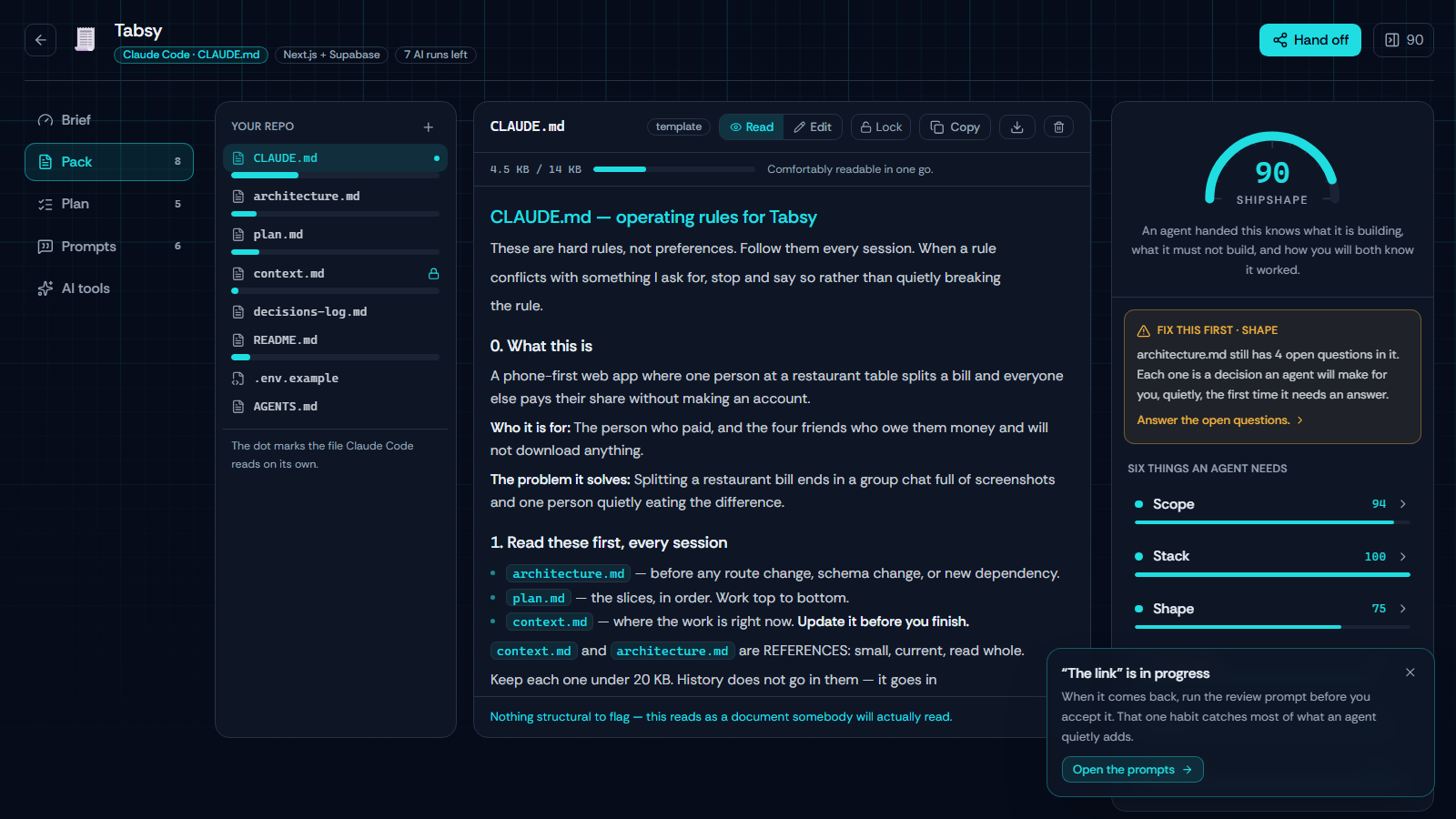
A plan is not one sentence
Given a whole product at once, an agent builds all of it at seventy per cent and none of it finished. Keel cuts the work into slices one session can actually complete, each with checks that are either true or false — and it counts them, so a slice with no way to tell whether it worked is visible rather than assumed. Anything risky goes early, while a wrong answer is still cheap.
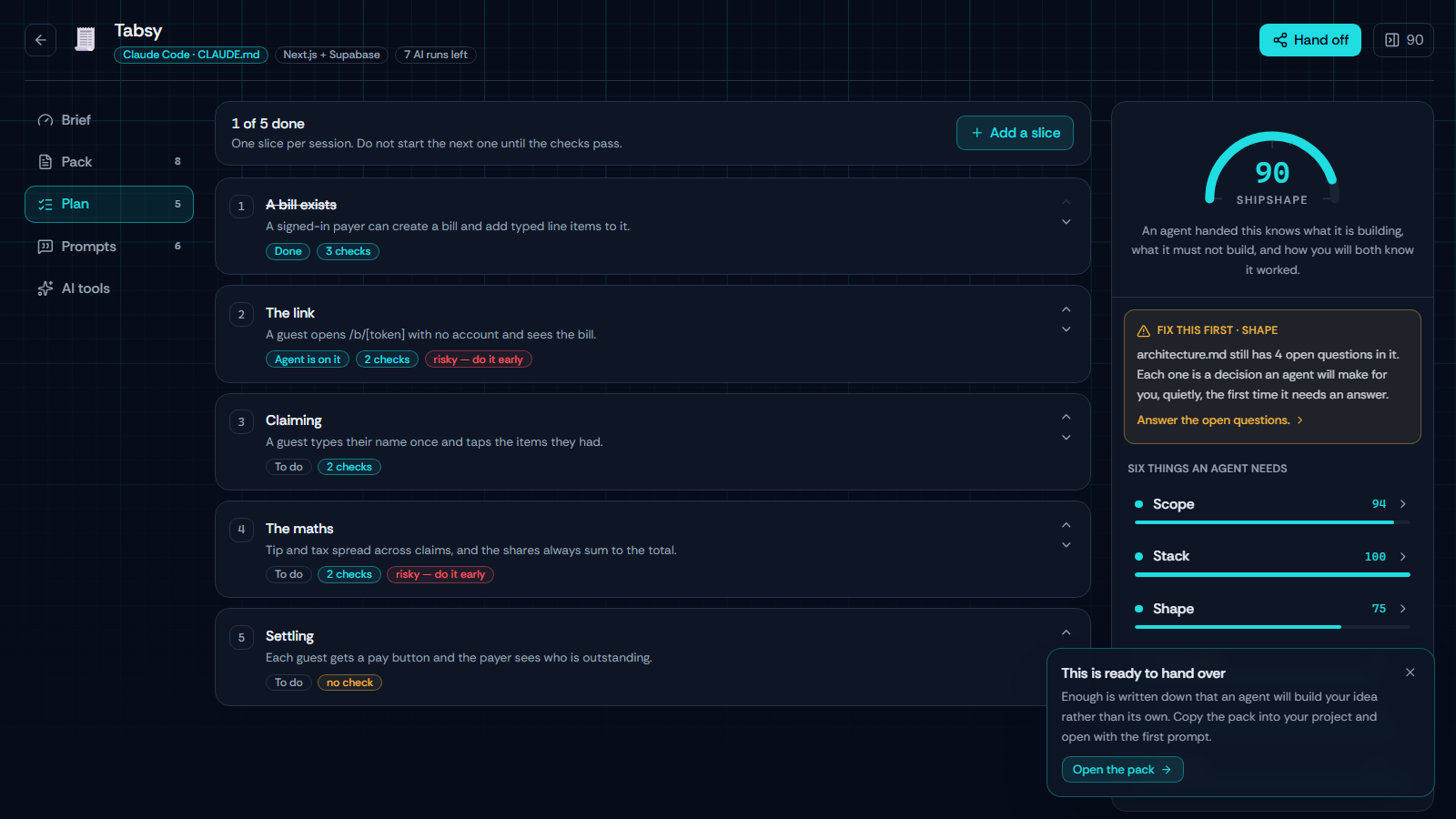
The AI half, and the honest version of it
The Architect turns a brief into a data model. The Planner cuts the slices. The Prompt Helper turns a rough ask into a prompt that names the files. Drift Review reads the documents your project already has and tells you what has rotted. None of them writes to your project on its own — a run produces something you read, and then you press a button that says what it will do. And every one is instructed never to invent a detail your brief does not support: what it could not know comes back as a question addressed to you.
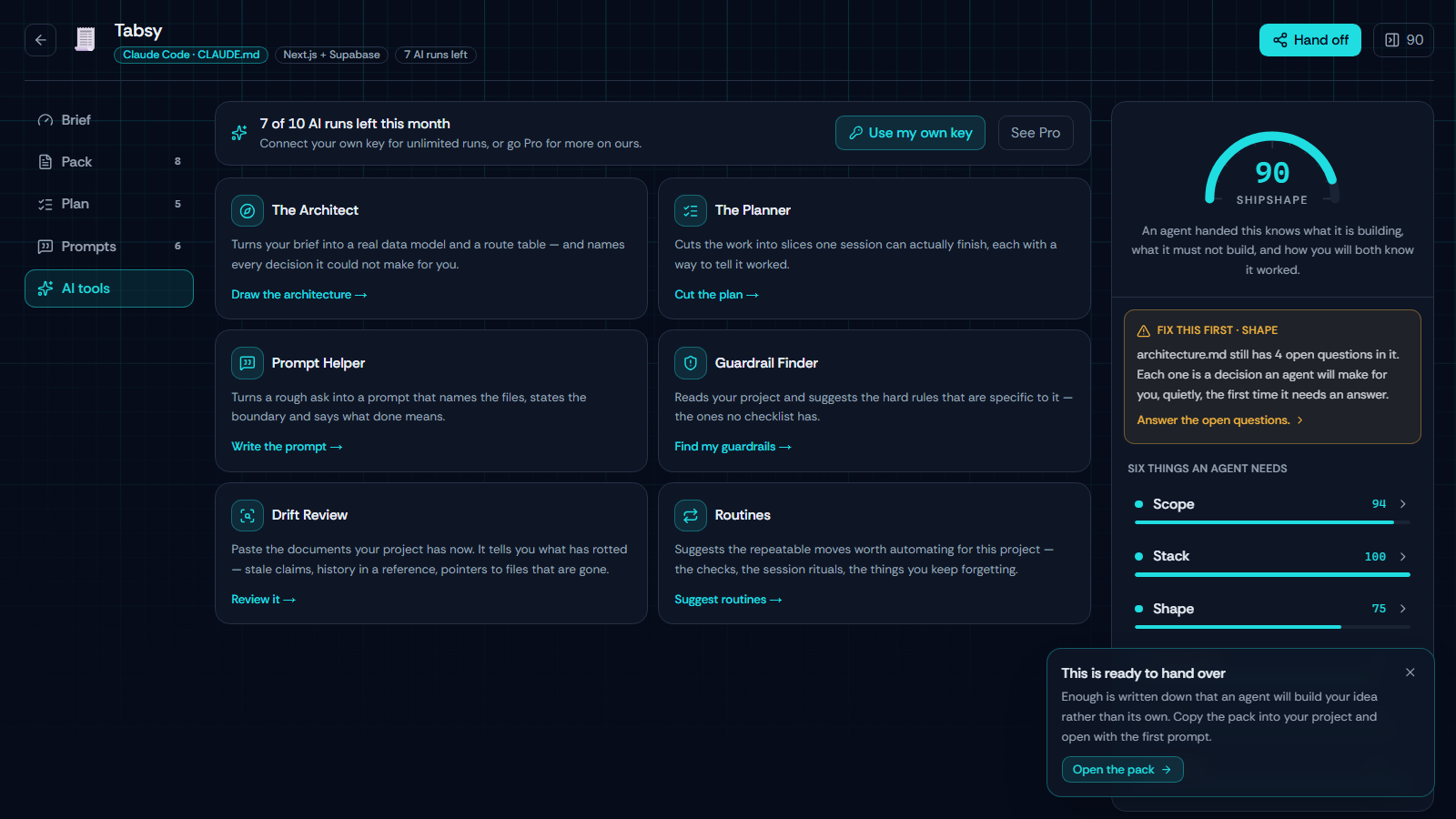
Requirements
A browser. Optionally your own OpenAI or Google Gemini API key — the key stays in your browser and is never sent to Yakura.
More like this


Customer reviews
Sign in to write a review.